Breeding Program Optimization
Breeding programs are long-term investments.
Decisions made today determine genetic progress for years to come.
Work Package 1 focuses on optimizing breeding program design using advanced simulation tools and data-driven strategies.
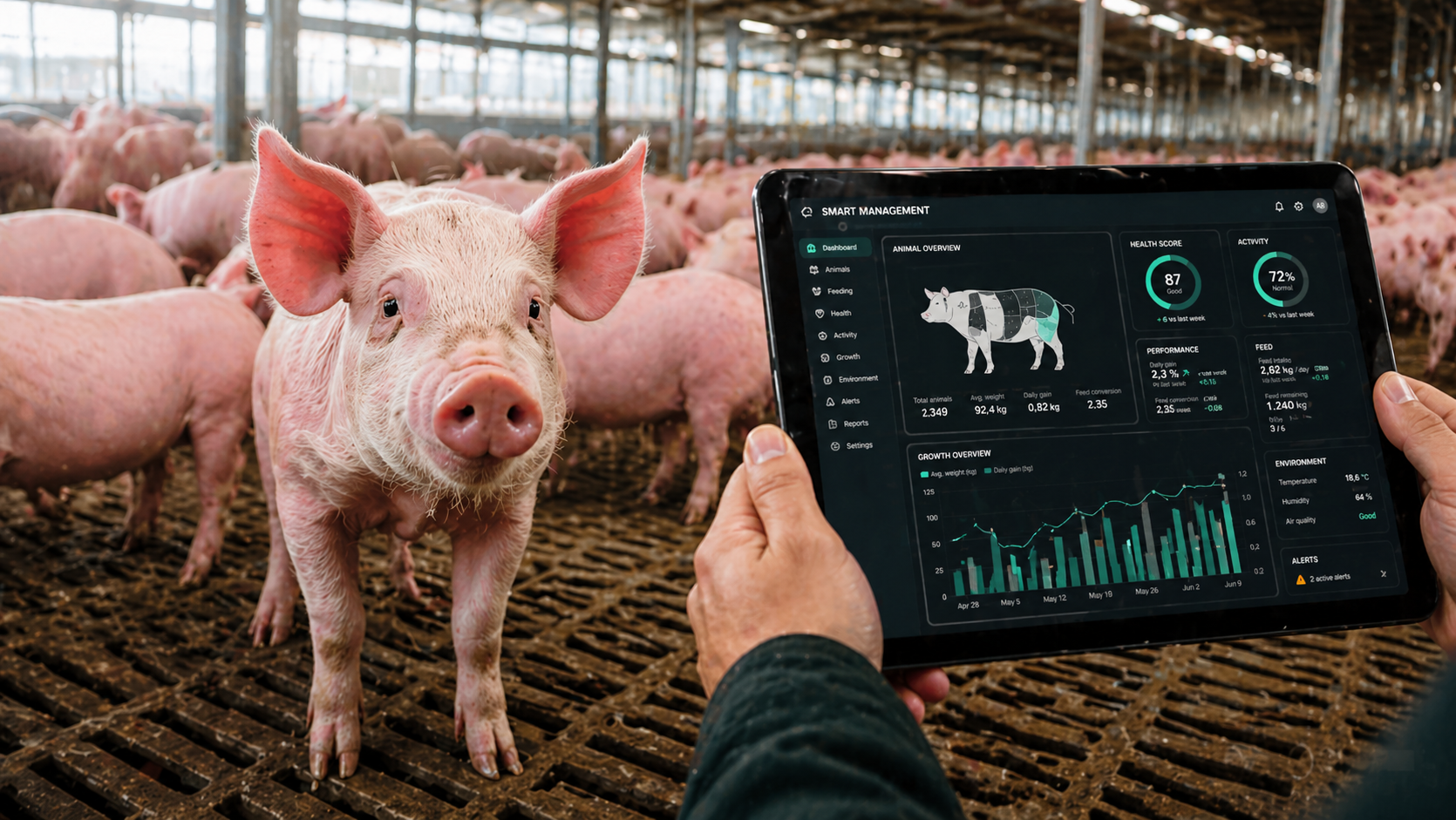
By developing digital twins of breeding programs, we create virtual environments in which breeding strategies can be tested before they are applied in practice.
These simulations capture real-world complexity, including crossbred performance and genotype-by-environment interactions, allowing partners to design breeding programs that are robust across different production systems and global markets.
→ go back to all work packages
Why it matters
Breeding companies face increasingly complex decisions:
- Where should we invest in phenotyping and genotyping?
- How do we balance short-term genetic gain with long-term stability.
- How do breeding programs perform across environments and markets?
At the same time, breeding programs must respond to global challenges such as sustainability, efficiency and changing market demands.
Work Package 1 provides the tools and insights needed to support well-informed decision-making, helping partners design breeding programs that are both efficient and future-proof.
What we do
Within Work Package 1, we develop the scientific knowledge and tools needed to optimise modern breeding programs in a rapidly changing environment.
At the core of this work are digital twin simulations (MoBPS), which allow us to model breeding programs in a realistic and flexible way. By integrating more complex models and external tools, we can simulate how breeding strategies perform across different markets, environments and production systems.
Building on these simulations, Work Package 1 focuses on designing and evaluating breeding program strategies, from mating decisions to phenotyping and genotyping approaches. This includes improving the way data is collected and used, and exploring how different strategies influence performance over time.
At the same time, we focus on managing genetic diversity and inbreeding, and on better understanding how breeding decisions behave under different scenarios. This allows us to move beyond static designs and towards adaptive, data-driven breeding programs.
Impact
Work Package 1 enables breeding companies to make better informed decisions about how to design and manage their breeding programs.
By combining advanced modelling with practical insights, it becomes possible to evaluate different strategies before they are implemented. This reduces uncertainty and improves efficiency. It also helps organisations make smarter use of their data, optimise resource allocation, and respond more effectively to changing market conditions.
As a result, breeding programs become more robust, more efficient, and better aligned with both global market needs and long term sustainability goals.
Ultimately, Work Package 1 translates scientific insight into practical breeding strategies. This supports continuous improvement in real world breeding programmes.